

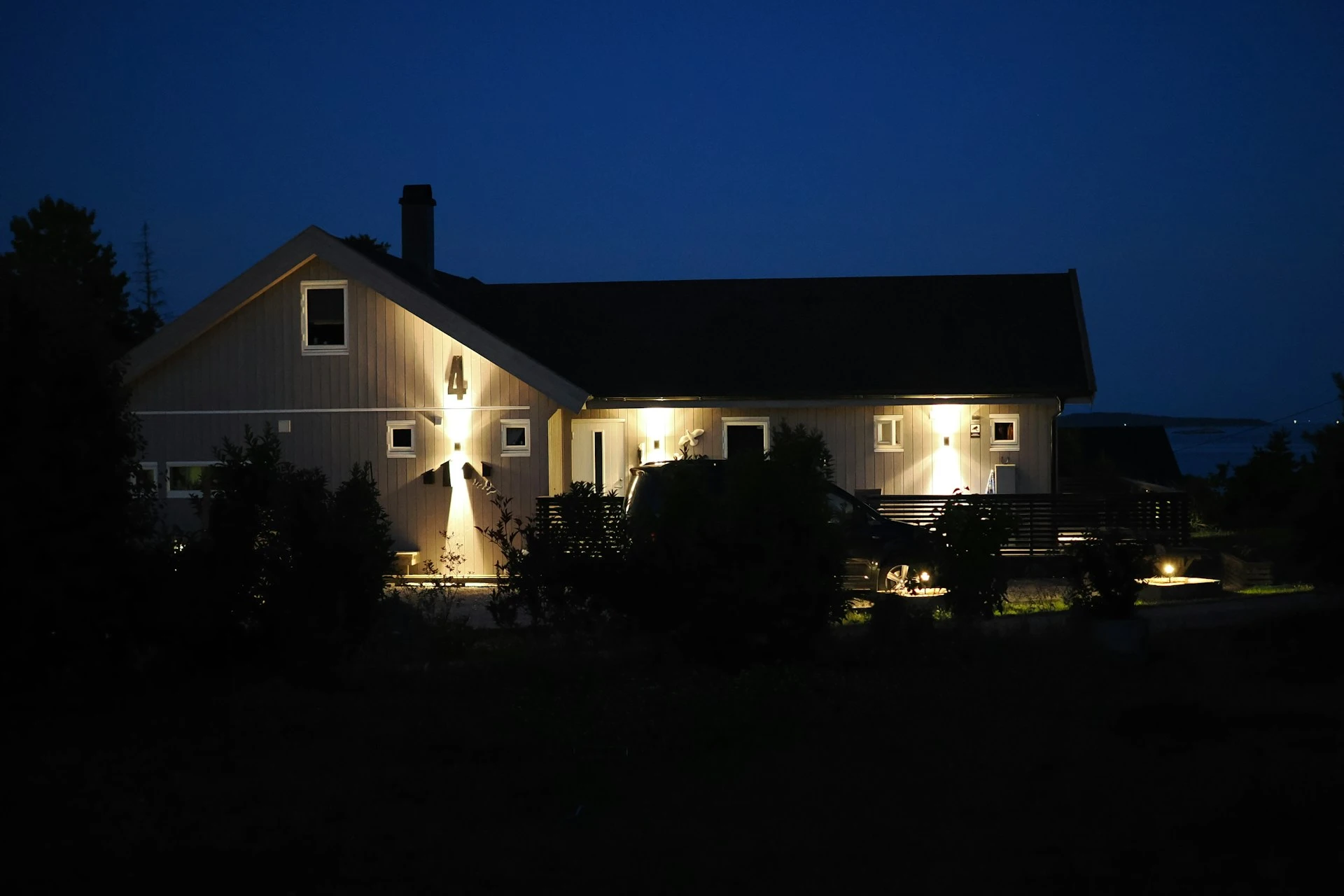
Outdoor lighting can do more than brighten your yard after dark. The right lighting can make outdoor spaces safer, improve home security, add curb appeal, and create a more inviting place to relax or entertain.
There are many types of outdoor lighting, and each one serves a different purpose. Some lights guide people along walkways and steps, while others highlight landscaping, improve visibility, or create a warm atmosphere around patios and decks.
In this guide, we’ll look at 9 types of outdoor lighting and explain where each type works best. You’ll also learn what to consider when choosing outdoor lights for your home.
1. Garden Lights
Garden lights are outdoor lighting fixtures used to add soft light to planted areas and garden spaces. They can make a yard easier to enjoy after dark while bringing attention to plants and landscape features.
They work well around flower beds, shrubs, trees, planters, and garden borders. You can also place them near seating areas or along the edges of a lawn to add gentle light without making the space feel too bright.
Garden lights are designed to highlight plants, trees, flower beds, and landscape features. They create depth in your yard and make outdoor spaces visually appealing after dark, completing a well-planned outdoor living space setup.
2. Pathway Lights
Pathway lights guide visitors safely along walkways, driveways, and garden paths. Positioning lights along walkways not only prevents tripping hazards but also complements your routine lawn maintenance by showing off clean landscape edges.
Use them along front walkways, garden paths, driveways, and routes leading to patios or entrances. Evenly spaced fixtures can improve visibility at night and make uneven surfaces or changes in the path easier to see.
3. Spotlights
Spotlights produce a focused beam of light that draws attention to a specific outdoor feature. Unlike wider outdoor lighting fixtures, they are designed to highlight one area rather than illuminate an entire space.
They are useful for trees, large plants, architectural details, statues, water features, and other focal points. Aim the light at the feature you want to highlight, while avoiding direct glare toward windows or seating areas.
4. Floodlights
Floodlights provide broad, powerful illumination over a larger area. They are useful when you need better visibility across open outdoor spaces rather than focused lighting on one feature.
They can be used around driveways, garages, side yards, backyards, and other areas that need strong illumination. Motion-activated floodlights can also provide light when movement is detected, which makes them useful for security and convenience.
For the best coverage, install floodlights at a suitable height and direct the beam toward the area you want to illuminate. Avoid positioning them where the light could shine directly into windows or create glare for people.
5. Up/Downlights
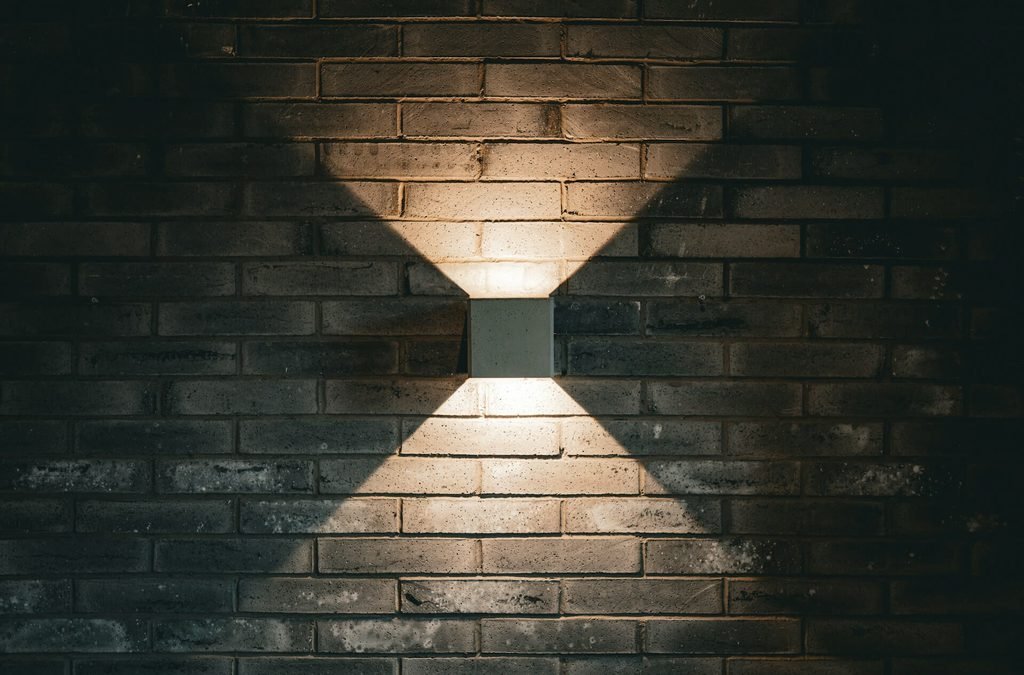
Up/downlights are wall-mounted outdoor fixtures that direct light in both upward and downward directions. This creates a layered lighting effect while adding visual interest to exterior walls.
They work well beside front doors, garage entrances, porches, and exterior walls. The upward light can emphasize architectural features, while the downward light provides useful illumination around the area below the fixture.
These lights are a good choice when you want outdoor lighting to serve both a practical and decorative purpose. Choose a fixture with a light pattern that complements your home’s exterior.
6. Step Lights
Step lights are compact fixtures designed to illuminate stairs and other elevation changes. They can be installed on walls, stair risers, or other suitable locations near steps.
They are useful on front steps, deck stairs, garden steps, and outdoor areas with different levels. Proper placement helps make each step easier to see and reduces dark areas that could make walking at night more difficult.
For comfortable lighting, position step lights so they provide clear visibility without creating harsh glare. They are especially useful on stairs that receive little natural light after sunset.
7. Bollard Lights
Bollard lights are short, vertical outdoor fixtures that provide low-level illumination close to the ground. Their shape makes them useful for defining outdoor paths and boundaries while adding a decorative touch.
They work well along walkways, driveways, garden borders, and landscape areas. Bollard lights can guide people through a property while helping define the edges of a path or outdoor space.
Space them evenly for a more consistent appearance and balanced illumination. They are a good option when you want practical pathway lighting without using bright fixtures.
8. String Lights
String lights feature multiple small light sources connected along a cable or cord. They are mainly used to add decorative lighting and create a relaxed atmosphere in outdoor living areas.
They work well on patios, porches, decks, pergolas, fences, and covered entertaining areas. You can hang them overhead or along suitable structures to create soft, evenly distributed light.
String lights are best for ambiance rather than strong task lighting. They can make an outdoor seating or dining area feel warmer and more inviting for evening gatherings.
9. Deck & Patio Lights
Deck and patio lights are outdoor fixtures designed to provide illumination around areas used for sitting, dining, and entertaining. They are available in different styles and can provide either practical or decorative light.
Use them around deck floors, patio edges, railings, seating areas, steps, and outdoor dining spaces. Well-placed fixtures can make these areas easier to use after dark while helping define the space.
They are particularly useful for outdoor entertaining. Combine deck or patio lights with other outdoor lighting, such as step or string lights, to create comfortable layers of light without making the area feel too bright.
These lights create a cozy ambiance for evening gatherings, especially when paired with durable exterior upgrades like garage floor resurfacing for a polished outdoor look.
How to Choose the Right Outdoor Lighting
The best outdoor lighting depends on what you want to achieve. Some fixtures improve visibility and safety, while others provide security, highlight landscape features, or create a comfortable outdoor living space.
Use this quick guide to match your needs with the right type of outdoor lighting:
| Your Goal | Best Outdoor Lighting | Why |
| Safety | Pathway & Step Lights | Improve visibility |
| Security | Floodlights | Cover larger areas |
| Ambiance | String & Garden Lights | Create a warm atmosphere |
| Highlight Features | Spotlights | Draw attention to trees or architecture |
| Outdoor Entertaining | String & Deck/Patio Lights | Make outdoor areas more inviting |
You do not need to use only one type of outdoor light. Combining different fixtures can create better outdoor lighting for your home. For example, pathway lights can improve visibility, while spotlights highlight landscaping and string lights add a softer atmosphere to a patio or deck.
What to Consider Before Buying Outdoor Lights
Choosing the right outdoor lights is not only about appearance. Consider how, where, and when you plan to use them.
- Purpose and location: Decide whether you need lighting for safety, security, decoration, or outdoor entertaining. Choose a fixture designed for that specific location.
- Brightness: Select enough light for the area without creating harsh glare. Pathways usually need softer lighting than driveways or security areas.
- LED efficiency: LED outdoor lights use less energy and generally last longer than traditional bulbs, according to LED energy efficiency standards. They are a practical choice for lights that operate frequently.
- Weather resistance: Outdoor fixtures should be rated for outdoor use and suitable for the weather conditions where they will be installed.
- Power source: Consider whether you prefer hardwired, plug-in, solar, or battery-powered outdoor lighting. Each option has different installation and maintenance needs.
- Sensors and timers: Motion sensors, timers, and dusk-to-dawn controls can make outdoor lights more convenient and help avoid unnecessary operation.
- Style: Choose fixtures that complement your home’s exterior, landscaping, and other outdoor features. The lighting should look natural during the day and at night.
- Installation: Check whether the fixture can be installed safely in your chosen location by following standard outdoor electrical installation safety guidelines. Hardwired lighting may require a qualified electrician, especially when new electrical connections are needed.
Conclusion: 9 Types of Outdoor Lighting
The right outdoor lighting can improve your home’s safety, security, appearance, and outdoor comfort. The 9 types covered in this guide garden lights, pathway lights, spotlights, floodlights, up/downlights, step lights, bollard lights, string lights, and deck and patio lights each serve a different purpose.
When choosing outdoor lights, think about where the light will be used and what you want it to do. Pathway and step lights can improve visibility, floodlights can provide wider illumination, while spotlights, garden lights, and string lights can add visual interest and ambiance.
A practical approach is to start with your home’s most important outdoor areas and choose lighting based on their specific needs. Using a combination of suitable fixtures can give you a safer, more functional, and more inviting outdoor space without making it unnecessarily bright.
Frequently Asked Questions
What are the main types of outdoor lighting?
The main types include garden, pathway, spotlight, floodlight, up/downlight, step, bollard, string, and deck and patio lights.
What type of outdoor lighting is best for pathways?
Pathway lights are ideal because they provide gentle illumination that improves visibility along walkways.
What type of outdoor lighting is best for security?
Floodlights are a practical choice for security because they provide broad illumination across larger outdoor areas.
Are LED lights good for outdoor use?
Yes, LED lights are energy-efficient, long-lasting, and a practical option for many outdoor lighting applications.
How do I choose the right outdoor lighting?
Choose outdoor lights based on their purpose, location, brightness, weather resistance, and power source.

