

When we first looked into living off-grid in the UK, we quickly realized it’s far more than just disconnecting from mains electricity, water, and gas; it’s a total lifestyle shift that requires navigating local council rules, managing private utilities, and building true energy resilience. Instead, an off-grid home may use solar power, battery storage, rainwater collection, private water supplies, and alternative heating or waste systems.
People consider off-grid living for different reasons. Some want greater energy independence and more control over their resources. Others are attracted to a quieter rural lifestyle, lower reliance on utility companies, or a more sustainable way of living. However, living off-grid also requires careful planning, regular maintenance, and a realistic budget.
If you are wondering how to live off-grid in the UK, this guide covers the key things to consider before making the move. You will learn about planning permission, choosing land or a property, renewable energy, water supply, heating and insulation, sewage and waste, internet access, food production, costs, and common challenges.
What Does Living Off-Grid Mean in the UK?
An off-grid home is a property that does not fully depend on mains electricity, water, gas, or sewer services. Instead, it manages essential resources through systems such as solar panels, battery storage, rainwater harvesting, private water supplies, and alternative sewage systems.
Electricity may come from solar panels or wind power, with batteries storing energy for later use. Water can come from rainwater harvesting, wells, or boreholes and may require filtration and treatment. Heating can use good insulation, heat pumps, or wood-burning stoves. Sewage may be handled through a septic tank or approved sewage treatment system.
There is also a difference between partially and completely off-grid living. A partially off-grid home may generate its own electricity while remaining connected to mains water. A completely off-grid home aims to manage all major utilities independently.
In practice, self-sufficient living does not mean producing everything yourself. It means reducing dependence on public utilities and managing essential resources more independently.
Is Off-Grid Living Legal in the UK?
Yes, off-grid living can be legal in the UK, but living independently from mains utilities does not remove normal planning and building requirements. The rules depend on the property, land use, location, and type of development.
Planning permission may be required if you want to build a new home, change the use of land or buildings, or carry out certain developments. Check the planning requirements for your property before starting any work. Owning agricultural or rural land does not automatically permit you to live on it.
You may also need to meet building regulations when constructing or altering an off-grid home. Requirements vary across the UK, so check with the relevant building control authority before starting work.
Land-use restrictions can also affect your plans, especially when buying agricultural or undeveloped land. What you can legally do with the land may be different from what you are allowed to do with an existing residential property.
Important: Buying agricultural land (typically costing £8,000 to £15,000 per acre in the UK) does not grant you residential planning permission under the Town and Country Planning Act 1990. Unless you qualify under Class Q Permitted Development or Paragraph 84 (exceptional rural design), living full-time in a mobile home or cabin on agricultural land can result in enforcement notices from the local council.
Sewage systems also have their own requirements. In England and Wales, discharging sewage directly into a watercourse using an old septic tank is now illegal under the Environment Agency’s General Binding Rules. You must install a BS EN 12566-certified small sewage treatment plant (costing roughly £3,000–£6,000) or use an approved soakaway drainage field.
The rules are not identical across England, Wales, Scotland, and Northern Ireland. Before buying land or starting work, check the requirements with the relevant planning authority and building control body for the exact property. This can help you avoid costly planning or building problems later.
Choose the Right Location for Off-Grid Living
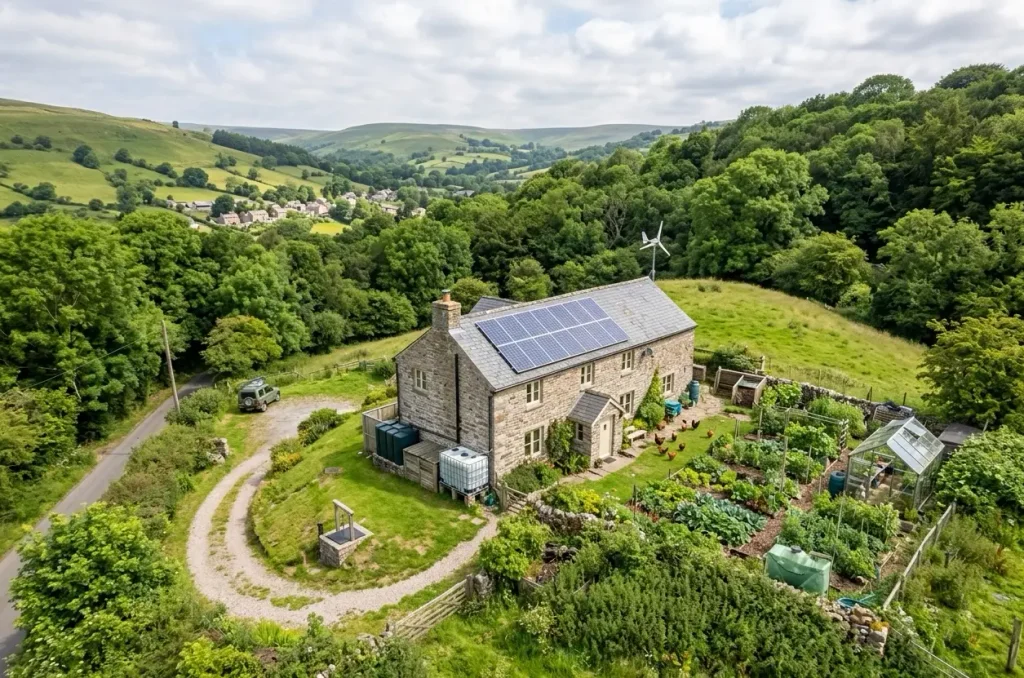
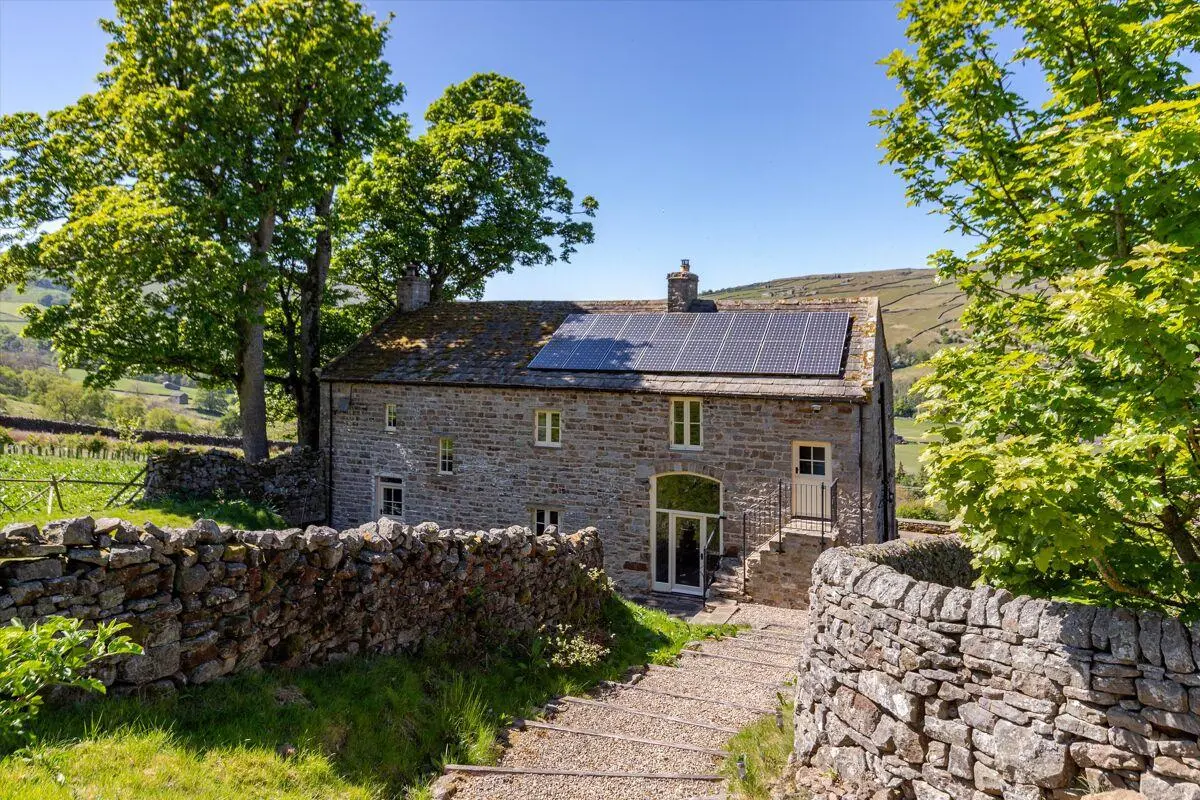
Choosing the right location is one of the most important steps when planning an off-grid home in the UK. Before buying land or property, check whether it can legally be used for your plans and whether the site can support the resources you need.
1. Check Planning Restrictions
Confirm the property’s planning status and any local restrictions before making an offer. Rural or agricultural land is not automatically suitable for residential use. Check with the local planning authority before making a major investment.
2. Compare Property and Undeveloped Land
An existing rural property may already have road access, buildings, water connections, and residential planning status. Undeveloped land may offer more freedom in some areas, but getting permission to live there can be much more complicated.
3. Assess Sunlight and Solar Potential
Check how much direct sunlight the property receives throughout the year. Avoid locations where trees, hills, or nearby buildings create significant shade. Good solar exposure can make a solar power system more effective.
4. Check Wind Conditions
If you are considering a small wind turbine, assess the site’s wind conditions and surrounding obstacles. Also check whether planning permission or other local requirements apply before installing one.
5. Confirm Water Availability
Find out how the property can obtain a reliable water supply. Possible options include mains water, rainwater harvesting, wells, or boreholes. If you plan to use a private water supply for drinking, check the relevant quality and treatment requirements.
6. Check Road Access
Reliable road access is important for deliveries, maintenance, fuel, equipment, and emergencies. A remote location may look attractive but become difficult to reach during severe UK weather.
7. Test Mobile Signal and Internet
Check mobile coverage at the actual property rather than relying only on coverage maps. If you work from home, research suitable broadband or satellite internet options before choosing a remote location.
8. Consider Essential Services
Consider how far you will need to travel for groceries, healthcare, schools, fuel, repairs, and other essential services. A very remote property can increase both travel time and ongoing costs.
The best location for off-grid living is not simply the most remote one. It is a property that offers suitable planning conditions, reliable resources, practical access, and enough infrastructure to support your lifestyle.
Plan Your Off-Grid Energy System
A reliable energy system is essential for an off-grid home. Start by estimating your daily energy needs and choosing a system that can produce enough electricity throughout the year. Your location, home size, appliances, and winter usage all affect the design.
Solar Power
Solar panels are a common choice for off-grid electricity generation in the UK. They convert sunlight into electricity and can work well when combined with battery storage.
UK winters present a severe solar power deficit; between November and February, solar yield drops by almost 80%. A standard 5kW solar array paired with a 10kWh lithium battery (costing around £8,000–£12,000 installed) won’t suffice on overcast days, making an auto-start backup LPG or silent diesel generator an absolute essential.
Wind Power
A small wind turbine can provide additional renewable energy where the site has suitable and consistent wind conditions. It may work well as a supplement to solar power, especially when solar production is lower.
However, wind power is not suitable for every property. Local conditions, nearby buildings, installation costs, and planning requirements should be considered before investing in a turbine.
Backup Electricity
A backup power source can help when renewable energy production is low or equipment needs maintenance. Depending on your setup, this could include a generator or additional battery capacity.
You can also improve energy independence by reducing electricity use. Choose efficient appliances, avoid unnecessary energy consumption, and prioritize essential loads. A well-planned system should match your actual energy needs rather than simply producing as much electricity as possible.
Set Up a Reliable Water Supply
A reliable water supply is essential for an off-grid home. Choose a system based on the property’s location, water availability, quality, and local requirements.
- Mains water vs private water supply: Mains water is usually simpler to manage. A private water supply may come from a well, borehole, spring, or another source. Private supplies may require regular testing and maintenance.
- Rainwater harvesting: Rainwater harvesting can collect water from suitable roof surfaces and store it for later use. The water may need filtration and treatment depending on how it will be used.
- Wells and boreholes: Drilling a private water borehole in the UK typically costs between £6,000 and £10,000 depending on depth and geological strata, plus ongoing filtration costs.
- Water storage tanks: Water storage provides a reserve when rainfall is low or a water system needs maintenance. Choose enough storage capacity for the property’s expected needs.
- Water filtration and treatment: Water from a private source should be tested to identify potential contaminants. Use appropriate water filtration and treatment before using it as drinking water.
- Safe drinking water: Do not assume that water from a well, borehole, or rainwater system is safe to drink. Follow the relevant guidance on private water supplies and have private water supplies tested when required.
- Managing water during dry periods: Reduce unnecessary water use, check for leaks, maintain storage tanks, and keep a backup supply where practical. Good planning helps maintain access to drinking water throughout the year.
Keep an Off-Grid Home Warm and Energy Efficient
Keeping an off-grid home warm is especially important during UK winters. A well-insulated home uses less energy and makes the heating system easier to manage. Regular HVAC maintenance can help heating and cooling equipment operate efficiently and identify problems before they become more expensive to fix.
- Home insulation: Insulate the roof, walls, floors, and other suitable areas to reduce heat loss. Good home insulation can improve comfort and lower energy demand.
- Draught-proofing: Seal unwanted gaps around doors, windows, and other openings. This helps prevent cold air from entering and warm air from escaping.
- Wood-burning stoves: A wood-burning stove can provide space heating where it is suitable and legally permitted. Make sure the installation, ventilation, chimney, and fuel storage meet applicable requirements.
- Heat pumps: A heat pump can provide efficient heating when the property and system are properly designed. It works best as part of a well-insulated home.
- Efficient heating system: Choose a heating system that matches the home’s size, insulation, available energy, and daily needs. An efficient system can reduce pressure on your off-grid power supply.
- Reduce heat loss: Use curtains, close doors between heated areas, maintain windows and doors, and avoid heating unused spaces unnecessarily. These simple steps can improve overall energy efficiency.
- Prepare for UK winters: Check insulation, heating equipment, batteries, fuel supplies, and backup power before cold weather arrives. Planning ahead can help prevent heating problems when energy production is lower.
Manage Sewage, Waste, and Greywater
An off-grid home needs a safe and practical system for handling sewage, wastewater, and household waste. The right setup depends on the property, local rules, and how the home is used.
- Septic tanks: A septic tank can treat wastewater from a property that is not connected to a mains sewer. It needs proper installation, regular inspection, and appropriate maintenance.
- Sewage treatment systems: A sewage treatment system may be suitable where a public sewer connection is not reasonably possible. The system must meet applicable planning, building, and environmental requirements.
- Composting toilets: A composting toilet can reduce water use and may be useful in some off-grid homes. Check local requirements and make sure waste is handled safely.
- Greywater: Greywater comes from sources such as showers, baths, and sinks. A suitable system may allow it to be reused or treated, but it should not be released carelessly into the environment.
- Household waste: Reduce the amount of waste your household produces. Store non-recyclable waste safely and arrange appropriate disposal where required.
- Recycling and composting: Separate recyclable materials and compost suitable organic waste to reduce the amount sent for disposal. Keep composting areas managed to avoid pests and odours.
- Responsible waste management: Good waste management means maintaining sewage systems, preventing pollution, following local disposal rules, and keeping waste away from water sources and living areas.
Stay Connected With Internet and Communication Services
Living off-grid does not mean you have to give up internet access. A reliable connection can be important for remote work, emergencies, banking, communication, and everyday tasks.
- Mobile broadband: Mobile broadband can be a practical option when a property has good cellular coverage. Check available networks and real-world signal strength before choosing a location.
- Reliable mobile signal: Test your mobile signal at the property, especially inside the home. A weak signal can make calls and mobile internet unreliable.
- Satellite internet: Satellite internet can provide connectivity in remote areas where fixed broadband or mobile networks are limited. Check equipment requirements, costs, and service availability before relying on it.
- Backup communication: Keep a backup way to communicate in case your main internet or mobile connection fails. A charged mobile phone and another suitable communication option can be useful during emergencies.
- Internet for remote work: If you work from home, choose your internet setup based on your actual needs. Consider connection reliability, data limits, power consumption, and whether you need video calls or large file transfers.
A good off-grid communication setup should be reliable without using more energy than necessary. Consider internet access when choosing your property rather than treating it as an afterthought.
Grow Food and Increase Self-Sufficiency
Growing some of your own food can reduce reliance on shops and make an off-grid lifestyle more self-sufficient. Start with crops that suit your available space, soil, climate, and time.
- Vegetable garden: A vegetable garden can provide fresh produce such as potatoes, carrots, lettuce, beans, and other suitable crops. Start small and grow foods your household regularly eats.
- Greenhouse: A greenhouse can protect plants from cold and extend the growing season. It can be useful for starting seedlings and growing crops that need more warmth.
- Fruit trees: Fruit trees can provide a long-term source of food once established. Choose varieties that are suitable for your local climate and available space.
- Herbs: Herbs need relatively little space and can be grown in garden beds, containers, or near the home. Choose varieties that you use regularly.
- Chickens and small livestock: Chickens may provide eggs and manure for the garden. Before keeping livestock, check local rules, available space, animal welfare needs, and ongoing costs.
- Food storage: Good food storage helps you preserve seasonal produce and maintain supplies during periods when fresh food is less available. Use suitable containers and storage conditions to reduce spoilage.
- Seasonal growing: Plan your crops around the UK growing seasons. Growing a variety of crops throughout the year can provide a more consistent supply.
- Sustainable gardening: Use composting, conserve water, protect soil health, and avoid unnecessary waste. These practices can support growing your own food while improving long-term self-sufficiency.
How Much Does It Cost to Live Off-Grid in the UK?
The cost of off-grid living in the UK can vary widely. There is no single realistic price because costs depend on the property, location, existing infrastructure, and how independent you want to be.
- Property or land: The biggest expense may be buying a suitable home or land. An existing residential property can be easier to adapt, while undeveloped land may require significant investment and planning approval.
- Solar panels and batteries: Your solar power system may include solar panels, an inverter, batteries, wiring, and installation. The size and cost depend on your energy needs and how much electricity you want to generate.
- Water systems: Costs can include rainwater harvesting equipment, storage tanks, pumps, filtration, wells, or boreholes. Private water supplies may also require testing and ongoing maintenance.
- Heating and insulation: Insulation can reduce energy demand, while the cost of heating depends on the system you choose. A heat pump, wood-burning stove, or another heating system may have different installation and running costs.
- Sewage and waste systems: Septic tanks, sewage treatment systems, composting toilets, and waste storage can add high costs. Installation and maintenance requirements vary by property.
- Internet and communication: Remote properties may need mobile broadband, satellite internet, or additional equipment. Include equipment, service fees, and backup communication in your budget.
- Tools and maintenance: Off-grid homes need regular maintenance. Budget for tools, replacement parts, system inspections, and repairs.
- Ongoing costs: You may still pay for internet, fuel, insurance, waste disposal, property maintenance, and replacement equipment. Living off-grid does not mean having no household expenses.
- Unexpected expenses: Keep an emergency fund for equipment failures, water problems, storm damage, or major repairs. Unexpected costs can be harder to manage when the property is remote.
The best approach is to create a property-specific budget before moving off-grid. Get quotes for major systems and include installation, maintenance, and future replacement costs. This gives you a more realistic picture of what your chosen level of self-sufficiency will cost.
What Skills Do You Need for Off-Grid Living?
Living off-grid requires more hands-on knowledge than a typical home. You do not need to be an expert in everything, but basic practical skills can help you maintain systems, solve minor problems, and avoid unnecessary costs.
- Basic DIY: Learn simple repairs, tool use, basic plumbing, and routine home maintenance. These skills can be useful when professional help is not nearby.
- Gardening: Basic gardening knowledge helps with growing vegetables, herbs, and fruit. Learn about soil, planting seasons, watering, and pest control.
- Solar and battery maintenance: Understand how your solar panels, inverter, and battery storage work. Know how to monitor energy production and identify basic system problems.
- Water-system maintenance: Learn how to inspect water storage, pumps, filters, and other equipment. Regular maintenance can help protect your private water supply.
- Heating maintenance: Know how to safely monitor and maintain your heating system. Follow the manufacturer’s instructions and use qualified professionals for work that requires specialist knowledge.
- Basic troubleshooting: Learn how to identify common problems with electricity, water, heating, and other household systems. Knowing when to call a professional is just as important.
- Budgeting: Track energy use, maintenance costs, supplies, and repairs. A realistic budget helps prevent unexpected expenses from becoming a major problem.
- Planning: Prepare for winter, poor weather, equipment failures, and periods of low energy or water availability. Good planning makes self-sufficient living more manageable.
Common Challenges of Living Off-Grid in the UK
Off-grid living can offer more independence, but it also comes with responsibilities that should be considered before making the move. Planning for common problems can make self-sufficient living more manageable.
- Unpredictable weather: Heavy rain, strong winds, storms, and cold weather can affect energy production, access, water systems, and heating.
- Limited sunlight in winter: Shorter winter days can reduce solar energy production. A suitable battery storage system and backup power can help cover periods of low generation.
- Power shortages: High energy use or poor weather can drain batteries faster than expected. Monitoring your energy needs and reducing unnecessary consumption can help.
- Water problems: Wells, boreholes, rainwater systems, and storage tanks can experience supply or maintenance issues. Have a reliable backup plan for essential drinking water.
- Equipment failures: Solar equipment, pumps, batteries, heating systems, and other components can fail. Keep essential spare parts and know when professional repairs are needed.
- Maintenance demands: An off-grid home requires regular checks and maintenance. Ignoring small problems can lead to more expensive repairs.
- Higher upfront costs: Setting up renewable energy, water, heating, and sewage systems can require significant investment before the home becomes fully operational.
- Isolation and distance from services: Remote properties may be far from stores, healthcare, tradespeople, and other services. Good road access and reliable communication can reduce some of these difficulties.
- Unexpected repairs: Storm damage, plumbing problems, equipment breakdowns, or other issues can create unexpected expenses. Keeping an emergency fund is a practical part of off-grid planning.
Living off-grid does not have to mean complete isolation. Staying connected with nearby communities and having reliable communication can provide practical support when needed.
Off-Grid Living Checklist for the UK
Use this checklist before moving to an off-grid home in the UK. Complete the legal, financial, and practical checks before making major investments.
- Research suitable locations: Compare properties based on planning status, sunlight, water availability, road access, and distance from essential services.
- Check planning requirements: Confirm planning permission, building regulations, and land-use restrictions with the relevant local authority.
- Confirm access to water: Check whether the property has mains water or needs a private water supply, well, borehole, or rainwater harvesting system.
- Calculate energy needs: Estimate how much electricity your home will use throughout the year, including during winter.
- Plan solar and battery capacity: Choose suitable solar panels, battery storage, and backup power based on your actual energy needs.
- Choose a heating system: Consider insulation first, then select a suitable heating system for the property and local climate.
- Plan sewage and waste: Decide how sewage, greywater, household waste, recycling, and composting will be managed safely.
- Check internet availability: Test mobile coverage and research broadband or satellite internet options before choosing a remote property.
- Plan food production: Decide whether you want a vegetable garden, greenhouse, fruit trees, or small livestock.
- Calculate upfront costs: Include the property, renewable energy, water, heating, sewage, equipment, installation, and other setup costs.
- Set aside an emergency fund: Keep money available for unexpected repairs, equipment replacement, severe weather, or temporary supply problems.
- Prepare for winter: Check insulation, heating, batteries, water storage, backup power, and essential supplies before cold weather arrives.
Pros and Cons of Living Off-Grid
Living off-grid can provide more independence and control, but it also requires planning, money, and regular maintenance. The benefits and drawbacks can vary depending on the property and how self-sufficient you want to be.
| Pros | Cons |
| Greater independence: More control over energy and resources. | High upfront costs: Renewable energy, water, heating, and sewage systems can be expensive. |
| Less reliance on mains utilities: Greater independence from public services. | Ongoing maintenance: Systems need regular monitoring, servicing, and repairs. |
| Potential long-term savings: Efficient systems may reduce some ongoing utility costs. | Winter challenges: Shorter days can reduce solar energy production. |
| Sustainable lifestyle: More opportunities to produce food and manage resources locally. | Planning restrictions: Land use and development may require approval. |
Overall, off-grid living can be a good choice for people who value independence and sustainable living, but it is not maintenance-free. A realistic budget, suitable property, reliable systems, and careful planning are essential for making it work.
Final Thoughts
Living off-grid in the UK is possible, but it requires careful planning and realistic expectations. Start by checking planning requirements and choosing the right location. Then plan your energy, water, heating, sewage, and waste systems around the property’s actual needs.
You do not need to become completely self-sufficient from day one. Start gradually, improve your systems over time, and keep a realistic budget and emergency fund. This approach can make off-grid living more practical, reliable, and sustainable.
Frequently Asked Questions About How to Live Off-Grid in the UK
Can you legally live off-grid in the UK?
Yes. Off-grid living can be legal in the UK, but the property must meet applicable planning, building, land-use, and environmental requirements.
How much does it cost to live off-grid in the UK?
Costs vary widely based on the property, location, energy system, water supply, heating, sewage, and level of self-sufficiency. Create a property-specific budget before making a major investment.
Can you live off-grid without mains electricity?
Yes. An off-grid home can generate electricity using solar panels, battery storage, wind power, or other suitable systems. A backup power source can also be useful.
How do off-grid homes get water?
Off-grid homes may use rainwater harvesting, wells, boreholes, private water supplies, or mains water. Private water sources may need testing and suitable filtration or treatment before drinking.
Can you live completely self-sufficiently in the UK?
It is possible to become highly self-sufficient, but complete independence is difficult. Most people still rely on outside services, products, equipment, or professional help to some extent.

